


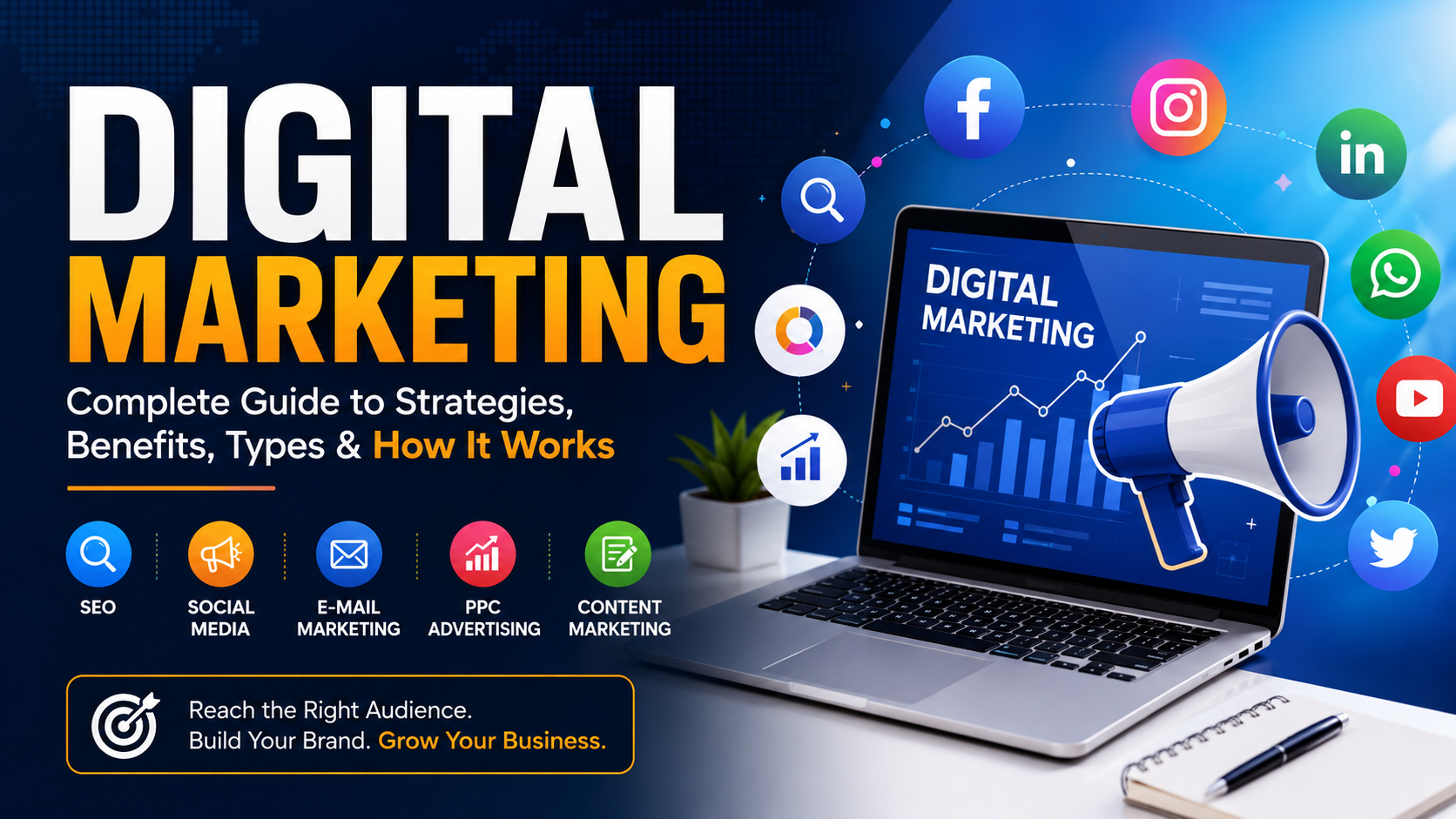
Digital Marketing has become an important part of how businesses, brands, creators, and organizations communicate with people. As more customers spend time online, businesses need effective ways to reach the right audience through digital channels. Digital Marketing provides a practical approach for promoting products, services, websites, applications, and brands through internet-based platforms.
Unlike traditional marketing methods that mainly depend on television, radio, newspapers, magazines, and printed advertising, Digital Marketing uses online technologies to connect businesses with potential customers. It can include search engines, websites, social media, email communication, online advertising, video content, mobile applications, and other digital channels.
One of the biggest advantages of Digital Marketing is the ability to understand audience behavior. Businesses can study how people interact with their content, advertisements, websites, and campaigns. This information can help marketers improve their strategies and create more relevant experiences.
Digital Marketing is not limited to one technique. It is a broad field containing multiple strategies that can work together. Search engine optimization, paid advertising, social media marketing, content marketing, email marketing, affiliate marketing, influencer marketing, and marketing automation are some of the major areas of Digital Marketing.
This complete guide explains Digital Marketing in simple language, including its meaning, major components, benefits, working process, history, strategies, and important considerations.
What Is Digital Marketing?
Digital Marketing is the practice of promoting a product, service, brand, website, or business through digital technologies and online channels.
The main purpose of Digital Marketing is to connect a business with its target audience where people spend their time online. A company can use digital content, search visibility, advertisements, social platforms, email campaigns, and other online methods to attract visitors and turn interested people into customers.
Digital Marketing is also measurable. Marketers can evaluate important activities such as website visits, content engagement, advertisement performance, leads, conversions, and customer interactions.
For example, a business may publish useful articles to attract people through search engines. It may also create social media content to build awareness and use email campaigns to communicate with existing customers. These activities can become part of one complete Digital Marketing strategy.
Why Is Digital Marketing Important?
The internet has changed the way people discover information and make purchasing decisions. Customers can search for information, watch videos, read articles, compare products, communicate with brands, and make decisions without visiting a physical location.
This makes Digital Marketing valuable for businesses of different sizes.
A strong digital strategy can help a business:
- Increase online visibility
- Reach a specific target audience
- Build brand awareness
- Generate website traffic
- Create potential customers
- Improve customer communication
- Promote products and services
- Measure marketing performance
- Develop long-term customer relationships
- Increase online conversions
Another important advantage is flexibility. A digital campaign can be adjusted when performance data shows that something needs improvement. Marketers can analyze results and make changes to content, targeting, messaging, or campaign structure.
Main Types of Digital Marketing
Digital Marketing includes several different methods. Each method has a specific purpose, but the strongest strategies often combine multiple approaches.
1. Search Engine Optimization
Search Engine Optimization, commonly called SEO, focuses on improving a website and its content so that people can discover it through search engines.
SEO can involve:
- Keyword research
- Helpful content creation
- Website optimization
- Page titles
- Meta descriptions
- Internal linking
- Content structure
- Image optimization
- Technical improvements
- User-friendly website design
The goal of SEO is to make content useful, understandable, and accessible to both users and search engines.
For example, a website publishing an article about Digital Marketing can organize the article around relevant questions, topics, and keywords. A clear structure can make the content easier for visitors to read and understand.
2. Pay-Per-Click Advertising
Pay-Per-Click advertising is a form of paid Digital Marketing where advertisers generally pay when users interact with an advertisement according to the advertising model.
PPC can provide businesses with an opportunity to reach people quickly. Instead of waiting for organic visibility, a company can create a paid campaign designed around specific audiences, keywords, interests, or objectives.
Successful PPC campaigns require careful planning. Advertisers need to consider:
- Campaign objectives
- Target audience
- Advertising message
- Landing pages
- Budget
- Keywords or targeting
- Conversion goals
- Performance measurement
Paid advertising should support a clear business goal rather than simply generating clicks.
3. Social Media Marketing
Social Media Marketing uses social platforms to communicate with audiences and promote brands, products, services, or content.
Businesses can use social media for:
- Brand awareness
- Community building
- Content distribution
- Customer communication
- Product promotion
- Audience engagement
- Paid advertising
- Influencer collaborations
Social media content can include short posts, images, videos, stories, educational material, announcements, and promotional content.
The most effective approach is usually to create content that provides value instead of making every post a direct advertisement.
4. Content Marketing
Content Marketing focuses on creating and distributing useful, relevant, and engaging content for a specific audience.
Content can take many forms, including:
- Blog articles
- Guides
- Tutorials
- Videos
- Infographics
- E-books
- Educational posts
- Frequently asked questions
- Product explanations
Content Marketing can support other areas of Digital Marketing. For example, high-quality articles can support SEO, while useful videos can support social media campaigns.
The primary goal is to answer audience questions and provide useful information while gradually building trust.
5. Email Marketing
Email Marketing involves communicating with customers and potential customers through email.
Businesses can use email campaigns for:
- Newsletters
- Product updates
- Special announcements
- Educational content
- Customer communication
- Promotional campaigns
- Follow-up messages
Email Marketing can be particularly useful for maintaining relationships with people who have already shown interest in a business.
A good email strategy should focus on relevant communication rather than sending unnecessary messages.
6. Affiliate Marketing
Affiliate Marketing is a performance-based approach where partners promote products or services and may receive a commission when specific results occur.
This method can allow businesses to expand their reach through external partners, publishers, creators, or other promotional channels.
An affiliate strategy should clearly define the promotion process, expected actions, tracking methods, and commission structure.
7. Influencer Marketing
Influencer Marketing involves working with individuals who have an established audience and can introduce a product, service, or brand to their followers.
Influencer campaigns can be used for:
- Brand awareness
- Product introductions
- Educational demonstrations
- Reviews
- Social content
- Audience engagement
The most important consideration is audience relevance. A large audience does not automatically mean that an influencer is suitable for every campaign.
8. Marketing Automation
Marketing Automation uses technology to automate repetitive marketing activities.
Automation can help with tasks such as:
- Email sequences
- Customer follow-ups
- Lead management
- Notifications
- Campaign workflows
- Audience segmentation
Automation can save time and create more consistent communication. However, automation should be designed carefully so that customers still receive useful and relevant messages.
How Digital Marketing Works
Digital Marketing generally follows a process that starts with understanding an audience and ends with measuring results.
Step 1: Identify the Target Audience
The first step is understanding who the business wants to reach.
Marketers can consider:
- Customer needs
- Interests
- Problems
- Online behavior
- Purchasing intentions
- Preferred content formats
A clear audience makes it easier to develop relevant content and campaigns.
Step 2: Set Marketing Goals
Every campaign should have a specific purpose.
Possible goals include:
- Increasing awareness
- Getting more website visitors
- Generating leads
- Increasing sales
- Promoting an application
- Building an online community
- Improving customer retention
Clear goals make campaign performance easier to evaluate.
Step 3: Choose the Right Channels
Not every business needs to use every digital channel.
A company should choose channels based on its audience and objectives. For example, an educational website may focus heavily on search-friendly articles, while a visual brand may prioritize video and image-based content.
Step 4: Create Valuable Content
Content is one of the foundations of Digital Marketing.
Useful content should answer questions, solve problems, explain products, or help the audience make better decisions.
Content should also be easy to read. Clear headings, short paragraphs, lists, examples, and logical organization can improve the user experience.
Step 5: Promote the Content
After content is created, businesses can distribute it through appropriate digital channels.
Promotion may involve organic search, social media, email communication, paid advertising, partnerships, or other digital methods.
Step 6: Measure Performance
Digital Marketing becomes more effective when results are measured.
Important performance indicators may include:
- Website traffic
- Engagement
- Clicks
- Leads
- Conversion rate
- Customer acquisition
- Returning visitors
- Campaign performance
The exact metrics depend on the goal of the campaign.
Step 7: Improve the Strategy
Digital Marketing is not a one-time activity. Marketers should review performance and improve campaigns over time.
If a particular type of content performs well, businesses can develop more useful content around related topics. If a campaign performs poorly, marketers can review its audience, message, landing page, or overall strategy.
Benefits of Digital Marketing
Digital Marketing offers several important benefits.
Global Reach
A website can make information accessible to people from different locations. Businesses can potentially reach audiences beyond their local market.
Better Audience Targeting
Digital campaigns can be designed for specific audiences. This can help businesses avoid wasting resources on people who are unlikely to be interested.
Measurable Results
Digital activities can be measured using different performance indicators. This helps marketers understand what is working.
Flexible Campaigns
Digital campaigns can often be updated faster than traditional campaigns. Businesses can modify content, advertisements, targeting, or messaging as needed.
Cost Management
Businesses can select different digital marketing approaches according to their available resources. Organic content strategies can work alongside paid campaigns.
Direct Communication
Digital channels provide opportunities for businesses to communicate directly with their audiences through websites, social platforms, email, and other channels.
Improved Customer Relationships
Consistent and useful digital communication can help businesses develop stronger relationships with their customers.
Digital Marketing Strategy
A Digital Marketing strategy should be based on clear objectives instead of random online activities.
A simple strategy can include five major areas:
Audience → Goal → Content → Promotion → Measurement
First, understand the audience. Second, define the goal. Third, create useful content. Fourth, distribute the content through suitable channels. Finally, measure performance and improve the strategy.
A business can create separate campaigns for awareness, engagement, lead generation, sales, and customer retention.
SEO and Digital Marketing
SEO is an important part of Digital Marketing because search engines can help people discover useful information.
A search-friendly website should focus on helpful content, logical structure, relevant keywords, readable headings, descriptive titles, and a positive user experience.
Keyword usage should remain natural. Repeating a keyword excessively can make content difficult to read. Instead, the primary topic should appear naturally in the title, introduction, headings, and relevant sections.
For this reason, Digital Marketing content should be written for people first while also maintaining a clear structure that search engines can understand.
Content Quality and User Experience
High-quality Digital Marketing content should be original, useful, clear, and relevant to the audience.
A good article should answer the main question quickly and then provide additional details for readers who want deeper information.
Important content qualities include:
- Original information
- Clear language
- Accurate explanations
- Logical headings
- Short and readable paragraphs
- Useful examples
- Relevant keywords
- Helpful internal navigation
- Mobile-friendly presentation
User experience also matters. A website should be easy to navigate and should make it simple for visitors to find the information they need.
Mobile Digital Marketing
Mobile devices have become an important part of internet usage. Many users discover content, watch videos, communicate with businesses, and browse websites from smartphones.
Therefore, Digital Marketing strategies should consider mobile users.
Mobile-friendly content should have:
- Responsive design
- Readable text
- Easy navigation
- Fast-loading pages
- Clearly visible buttons
- Simple forms
- Properly sized images
A marketing campaign can lose potential visitors if the content is difficult to use on a small screen.
The Role of Data in Digital Marketing
Data helps marketers understand how audiences interact with digital content.
For example, marketers may study:
- Which pages receive visitors
- Which content receives engagement
- Which campaigns generate leads
- Which messages receive responses
- Where users leave a website
- Which channels contribute to conversions
This information can support better decision-making.
However, data should be handled responsibly. Businesses should respect user privacy and follow applicable requirements when collecting, storing, and using customer information.
History of Digital Marketing
Digital Marketing developed gradually as digital technologies became more common.
During the early development of online advertising, businesses began experimenting with digital banners and websites. Search engines later became important discovery tools, creating opportunities for businesses to optimize online content.
The growth of search advertising introduced new ways for companies to reach users based on their searches and interests. Social media then created another major opportunity by allowing businesses to communicate directly with communities.
Video platforms expanded digital content even further, while smartphones transformed the way people consumed online information.
During the 2010s, mobile technology, social media, automation, and data-driven marketing became increasingly important. More recently, artificial intelligence has introduced new possibilities for content creation, customer support, campaign analysis, personalization, and workflow automation.
The history of Digital Marketing shows a clear movement from simple online advertising toward sophisticated, data-informed, personalized digital experiences.
Digital Marketing and Artificial Intelligence
Artificial intelligence is becoming increasingly relevant to Digital Marketing.
AI-based tools can assist marketers with activities such as:
- Content ideas
- Data analysis
- Customer support
- Audience segmentation
- Automation
- Personalization
- Campaign optimization
- Research assistance
AI can improve productivity, but human review remains important. Marketing content should be checked for accuracy, usefulness, originality, and relevance before publication.
The best approach is to use technology as a support tool rather than depending completely on automated content.
Common Digital Marketing Mistakes
Businesses can make several mistakes when developing digital campaigns.
Focusing Only on Promotion
If every piece of content is designed to sell something, audiences may lose interest. Businesses should balance promotional material with educational and useful content.
Ignoring the Target Audience
A campaign cannot be effective if it does not understand the people it is trying to reach.
Using Too Many Channels
Trying to maintain every platform can spread resources too thin. It is often better to focus on channels that support specific goals.
Neglecting SEO
A strong website may still struggle to attract organic visitors if its content and structure are not search-friendly.
Ignoring Mobile Users
Poor mobile experiences can create unnecessary barriers for visitors.
Not Measuring Results
Without measurement, marketers cannot easily determine which activities are producing useful outcomes.
Expecting Immediate Results
Some Digital Marketing strategies, particularly content and organic search strategies, can require consistent effort and time.
Best Practices for Digital Marketing
A successful approach should focus on consistency, usefulness, and continuous improvement.
Here are some practical best practices:
- Understand your audience before creating campaigns.
- Set measurable marketing goals.
- Create original and useful content.
- Use keywords naturally.
- Optimize content for mobile users.
- Build a clear website structure.
- Use social media strategically.
- Measure campaign performance.
- Improve content based on user behavior.
- Protect customer information.
- Maintain consistent branding.
- Avoid unnecessary keyword repetition.
- Test different content formats.
- Focus on long-term customer relationships.
- Review your Digital Marketing strategy regularly.
FAQs
What is Digital Marketing in simple words?
Digital Marketing means promoting a business, product, service, website, or brand through digital channels such as websites, search engines, social media, email, online advertising, and digital content.
Why is Digital Marketing important?
Digital Marketing helps businesses reach online audiences, communicate with customers, build visibility, generate traffic, and measure campaign performance.
What are the main types of Digital Marketing?
Major types include SEO, PPC advertising, social media marketing, content marketing, email marketing, affiliate marketing, influencer marketing, and marketing automation.
Is SEO part of Digital Marketing?
Yes. SEO is one of the major components of Digital Marketing. It focuses on helping websites and content become easier to discover through search engines.
Is Digital Marketing useful for small businesses?
Yes. Small businesses can use digital channels to build awareness, attract potential customers, communicate with their audience, and develop an online presence.
How long does Digital Marketing take to work?
Results depend on the strategy, competition, audience, content quality, budget, and business objectives. Some paid campaigns can produce results quickly, while organic content and SEO usually require consistent long-term effort.
Can Digital Marketing be done without paid advertising?
Yes. Businesses can use organic approaches such as SEO, content creation, community engagement, and email communication. Paid advertising can be added when appropriate.
Future of Digital Marketing
The future of Digital Marketing will continue to be influenced by technology, changing consumer behavior, mobile usage, automation, artificial intelligence, and personalized experiences.
Businesses will need to focus not only on reaching people but also on providing useful experiences.
Personalization can help businesses present more relevant content to different audience segments. Automation can reduce repetitive work, while AI can support analysis and content workflows.
At the same time, trust and transparency will remain important. Customers want useful information and responsible handling of their data.
The businesses that succeed with Digital Marketing are likely to be those that combine technology with creativity, customer understanding, valuable content, and consistent improvement.
Conclusion
Digital Marketing is a broad and constantly developing approach to promoting businesses, products, services, and brands through digital channels. It combines multiple strategies, including SEO, paid advertising, social media marketing, content marketing, email marketing, affiliate marketing, influencer marketing, and automation.
The strength of Digital Marketing comes from its ability to connect businesses with specific audiences while providing opportunities to measure and improve performance.
A successful strategy does not depend on using every available platform. Instead, businesses should understand their audience, establish clear objectives, create valuable content, select suitable channels, measure results, and continuously improve their campaigns.
As online technology continues to evolve, Digital Marketing will remain an important part of modern business communication. Whether the goal is to increase visibility, attract visitors, generate leads, promote products, or build lasting customer relationships, a well-planned Digital Marketing strategy can provide a strong foundation for long-term online growth.
For businesses and creators, the most important lesson is simple: focus on the audience, provide genuine value, use digital channels strategically, and improve based on real results. That approach makes Digital Marketing more useful, sustainable, and effective over time.
