

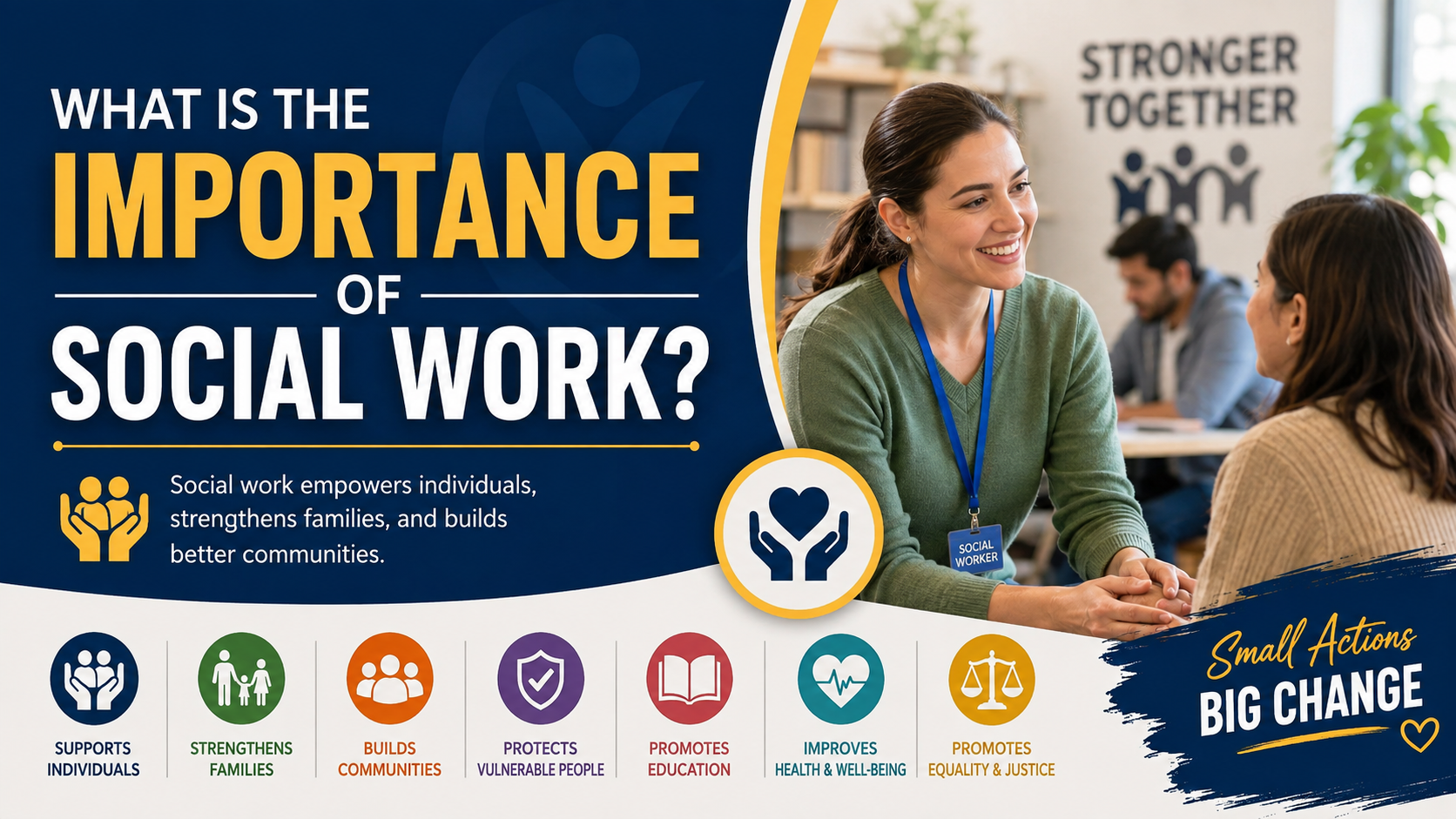
What is the importance of social work? Social work is important because it helps individuals, families, and communities deal with social, economic, emotional, educational, and personal challenges. It connects people with useful resources, provides guidance during difficult situations, promotes human rights, and works toward creating stronger and healthier communities.
Work is not limited to helping people during emergencies. It also focuses on preventing social problems, improving living conditions, protecting vulnerable people, supporting families, encouraging education, and promoting equality. Professional social workers may work in schools, hospitals, community organizations, family services, rehabilitation programs, and other social service environments.
The importance of work can be understood by looking at the many ways it improves people’s lives. A person experiencing poverty may need access to education, employment, housing, or financial assistance. A child facing problems at home may need protection and support. A patient and family may need help understanding available services. A community experiencing conflict may need guidance, cooperation, and organized support.
This is why work has an important place in modern society. It focuses on people, their needs, their rights, and their ability to improve their lives.
In this complete guide, we will explain what is the importance of social work, the major types of work, its benefits, the role of workers, and how social work contributes to community development.
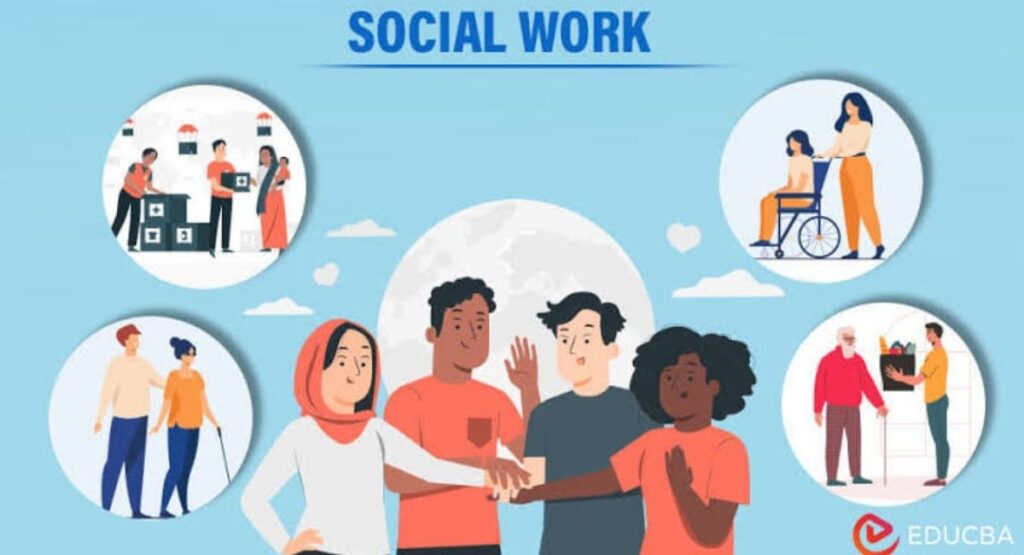
What Is Social Work?
Social work is a professional field that focuses on helping people improve their well-being and deal with challenges affecting their daily lives. It combines knowledge, communication, problem-solving, counseling, advocacy, and community support to help individuals and groups find practical solutions.
Social workers may assist people who are experiencing poverty, family difficulties, discrimination, violence, educational problems, unemployment, housing difficulties, health challenges, or other social issues.
The main purpose of work is to support people while helping them become more capable of managing their circumstances. Instead of simply providing temporary assistance, work can help individuals understand their options, access appropriate services, build useful skills, and become more independent.
Work also has a community-level purpose. Social workers can identify problems affecting groups of people and participate in programs designed to improve education, health, safety, employment, inclusion, and quality of life.
Therefore, work connects individual support with broader social development.
What Is the Importance of Social Work?
The importance of work comes from its ability to address problems that affect individuals, families, and communities. Many people face difficulties that they cannot solve alone. Social workers can provide guidance, connect people with resources, advocate for vulnerable groups, and encourage positive change.
Here are some of the most important reason social work matters.
1. Social Work Supports People in Difficult Situations
Life can become difficult because of poverty, unemployment, family conflict, illness, disability, displacement, abuse, or other circumstances. People experiencing these problems may not know where to find appropriate help.
Social workers can listen to people’s concerns and help them identify possible solutions. They can explain available resources, assist with referrals, and provide practical guidance.
This support can make difficult situations easier to manage and can help people regain confidence.
2. Social Work Helps Reduce Poverty
Poverty is one of the major social challenges faced by communities around the world. People experiencing poverty may have difficulty accessing food, housing, education, healthcare, and employment opportunities.
Work can help people understand and access available support programs. Social workers can also help individuals develop plans for education, employment, training, and financial stability.
The goal is not simply to provide immediate assistance. Effective work can also address the underlying factors that contribute to long-term poverty.
3. Social Work Protects Vulnerable People
Children, older adults, people with disabilities, displaced individuals, and people experiencing abuse or exploitation may require additional protection.
Social workers can help identify risks and connect vulnerable people with appropriate protective services. They may also work with families and communities to improve safety and reduce harmful situations.
Protecting vulnerable people is one of the clearest examples of what is the importance of social work in everyday society.
4. Social Work Supports Children and Families
Families can experience many different challenges, including financial pressure, communication problems, separation, parenting difficulties, domestic conflict, and child protection concerns.
Social workers can help families communicate more effectively and identify available resources. In situations involving children, their work can focus on safety, development, education, and well-being.
Family work can also help parents understand children’s needs and develop healthier relationships within the household.
A stable family environment can have a positive influence on children’s education, emotional development, and future opportunities.
Major Types of Social Work
Work is a broad field. Different social workers focus on different populations, problems, and environments.
1. Clinical Social Work
Clinical work focuses on emotional, behavioral, and mental well-being. Professionals in this area may provide counseling, assessment, support, and referrals.
Clinical social workers can help people manage difficult life experiences, emotional challenges, relationship problems, and other personal difficulties.
Their work may take place in healthcare facilities, community settings, private practices, or other support environments.
2. Child and Family Social Work
Child and family work focuses on children’s safety, development, and family well-being.
Social workers may assist families experiencing serious difficulties and help connect them with appropriate services. They can also participate in child protection and family support programs.
The objective is to create safer and healthier environments for children and families.
3. Community Social Work
Community work focuses on improving conditions within communities.
Community social workers may work with residents, organizations, and local groups to identify problems and develop solutions. Their activities can include community education, resource coordination, advocacy, and development programs.
This type of work emphasizes cooperation and community participation.
4. Healthcare Social Work
Healthcare social workers help patients and families deal with social and practical issues connected with healthcare.
A patient may need assistance understanding available services, arranging support, communicating with family members, or planning for life after treatment.
Healthcare work recognizes that health is influenced by more than medical treatment. Housing, income, family support, education, and social conditions can also affect people’s well-being.
5. School Social Work
School social workers support students, families, teachers, and school communities.
Students may face problems outside the classroom that affect attendance, behavior, learning, or relationships. Social workers can help identify these difficulties and connect students and families with appropriate support.
They can also encourage communication between schools and families.
6. Criminal Justice Social Work
Criminal justice work involves supporting people who interact with the justice system.
The focus may include rehabilitation, reintegration, family support, behavioral change, and reducing the likelihood of repeated harmful behavior.
The broader objective is to help individuals make positive changes and return to productive participation in society.
Why Is Social Work Important for Society?
A society is made up of people with different needs, backgrounds, abilities, and circumstances. Not everyone has equal access to resources or opportunities.
Work helps address these differences by supporting people who face barriers.
Promotes Equality
Social workers can advocate for people who experience discrimination or exclusion. They help individuals understand their rights and access appropriate services.
Strengthens Communities
Community-based work encourages cooperation and participation. When people work together to solve common problems, communities can become stronger and more resilient.
Encourages Social Responsibility
Work teaches the importance of helping others and recognizing community needs. It encourages people and organizations to take responsibility for improving social conditions.
Helps Prevent Social Problems
Work is not only about responding to existing problems. Prevention is also important.
For example, educational programs, family support, youth activities, and community awareness can help address risks before they become more serious.
Role of Social Workers
Social workers perform many different responsibilities depending on their area of practice.
Some important responsibilities include:
- Listening to individuals and families
- Assessing social needs
- Providing guidance and support
- Connecting people with appropriate services
- Advocating for vulnerable individuals
- Supporting children and families
- Promoting education and awareness
- Helping resolve conflicts
- Supporting community development
- Encouraging independence
- Protecting vulnerable people
- Working with other professionals
- Helping people create practical plans for improvement
The exact responsibilities depend on the environment in which a social worker operates.
Social Work and Human Rights
Human rights are an important part of Work.
Every person deserves dignity, safety, respect, and fair treatment. However, some people experience discrimination, poverty, exploitation, violence, or exclusion.
Social workers can advocate for individuals and communities facing these challenges.
They can help people understand their rights and connect them with organizations or services that may provide assistance.
Work therefore contributes to a society in which people are treated with dignity and have opportunities to participate in community life.
Social Work and Education
Education can change a person’s future, but social and economic difficulties can make it difficult for some students to succeed.
Social workers can support students who experience barriers to education. These barriers may include family difficulties, financial problems, social challenges, poor attendance, or other circumstances.
School-based work can encourage communication between students, parents, teachers, and support services.
Education is particularly important because it can improve knowledge, skills, employment opportunities, confidence, and long-term independence.
Social Work and Youth Development
Young people are an important part of every society. Supporting youth can help create stronger communities in the future.
Work can encourage young people to focus on education, personal development, positive relationships, and responsible decision-making.
Youth programs can also provide safe spaces where young people can learn skills, communicate with others, and participate in constructive activities.
Helping young people overcome challenges early can reduce the impact of social problems later in life.
Social Work and Community Development
Community development is another major area where work has an important role.
A community may face challenges involving unemployment, education, healthcare, housing, poverty, discrimination, or access to services.
Social workers can help communities identify these problems and organize appropriate responses.
Community development may involve:
- Community education
- Public awareness programs
- Resource coordination
- Support groups
- Youth programs
- Family services
- Advocacy
- Local partnerships
- Skills development
- Social inclusion
Successful community development depends on participation. Social workers can help people become active participants in decisions that affect their lives.
Social Work Helps Resolve Family Conflicts
Family conflict can affect relationships, children’s development, education, and emotional well-being.
Social workers can help family members communicate and understand different perspectives. In appropriate situations, they can support mediation and encourage constructive problem-solving.
The goal is to reduce harmful conflict and help families find practical ways to move forward.
Work does not mean forcing people to agree. Instead, it focuses on communication, safety, support, and appropriate solutions.
Social Work and Healthcare
Health and social conditions are closely connected.
A person may receive medical care but still face problems involving housing, transportation, finances, family responsibilities, or access to services.
Healthcare social workers can help identify these practical and social needs.
They may support patients and families by:
- Providing information
- Connecting people with services
- Helping with care planning
- Supporting communication
- Assisting families during difficult periods
- Identifying social barriers to well-being
This demonstrates that work can complement other forms of professional support.
Social Work and Mental Well-Being
Work can also support emotional and psychological well-being.
People may experience stress because of unemployment, family conflict, poverty, social isolation, loss, or difficult life circumstances.
Depending on their training and professional role, social workers may provide supportive counseling, referrals, advocacy, and practical assistance.
Addressing social circumstances can sometimes make it easier for people to cope with other difficulties in their lives.
Social Work and Older Adults
Older adults may face challenges involving isolation, health needs, mobility, housing, finances, or family support.
Social workers can help older adults understand available resources and maintain independence where possible.
They may also work with families to understand the needs of older relatives and coordinate appropriate support.
Respect for dignity and personal choice is an important part of this work.
Social Work and People With Disabilities
People with disabilities may encounter barriers involving education, employment, transportation, communication, housing, and social participation.
Work can help identify these barriers and connect individuals with appropriate resources.
The objective is to promote inclusion, independence, dignity, and equal participation.
Social workers can also advocate for accessible services and help families understand available support.
Benefits of Social Work
The benefits of work can be seen at both individual and community levels.
Individual Benefits
Social work can help people:
- Understand their problems
- Find appropriate support
- Access useful resources
- Develop coping strategies
- Improve communication
- Build confidence
- Make informed decisions
- Become more independent
Family Benefits
Families can benefit through:
- Better communication
- Conflict support
- Parenting guidance
- Child protection
- Access to community resources
- Stronger relationships
Community Benefits
Communities can benefit from:
- Greater cooperation
- Increased awareness
- Better resource access
- Social inclusion
- Community participation
- Support for vulnerable groups
- Prevention of social problems
Importance of Social Work in Modern Society
Modern society is changing rapidly. Technology, migration, economic changes, unemployment, urbanization, and changing family structures can create new opportunities as well as new challenges.
People may experience social isolation even while being connected digitally. Families may face financial pressure. Young people may struggle with educational or employment uncertainty.
Work remains important because it focuses on the human side of these challenges.
It provides a structured way to understand people’s needs and connect them with practical support.
As society changes, work can also adapt to new problems and new forms of service delivery.
How Social Work Helps Prevent Social Problems
Prevention is one of the most valuable aspects of work.
Instead of waiting until a problem becomes severe, social workers can participate in awareness and early-support programs.
For example, communities can provide:
- Parenting education
- Youth development programs
- School support
- Community awareness
- Family counseling
- Employment guidance
- Social inclusion programs
- Support for vulnerable people
Early intervention can help individuals and families address difficulties before they become more complicated.
Importance of Communication in Social Work
Communication is one of the most important skills in work.
A worker needs to listen carefully, understand people’s concerns, ask appropriate questions, and explain information clearly.
Good communication can help build trust.
People who are experiencing difficult circumstances may feel ignored, misunderstood, or afraid to ask for help. A respectful conversation can help them feel heard.
Social workers also communicate with families, teachers, healthcare professionals, community organizations, and other professionals.
Therefore, effective communication is essential for successful work.
Importance of Empathy in Social Work
Empathy means trying to understand another person’s experiences and feelings.
Social workers often meet people who are dealing with difficult circumstances. Empathy helps professionals respond respectfully and avoid making unfair assumptions.
However, professional work requires more than simply feeling sympathy. It also requires practical skills, ethical decision-making, appropriate boundaries, and knowledge of available resources.
Combining empathy with professional knowledge allows workers to provide meaningful support.
Challenges Faced by Social Workers
Social work is valuable, but it can also be challenging.
Workers may work with complex cases involving poverty, family conflict, abuse, discrimination, homelessness, health problems, or other difficult situations.
Some common challenges include:
- Heavy workloads
- Limited resources
- Complex family situations
- Emotional pressure
- Difficult decision-making
- Communication barriers
- Lack of community resources
- Safety concerns
- Large numbers of people needing support
Despite these challenges, social workers continue to play an important role in helping individuals and communities.
Skills Needed
A successful worker needs a combination of professional knowledge and interpersonal skills.
Important skills include:
Communication
They need to communicate clearly with people from different backgrounds.
Listening
Active listening helps professionals understand what people are actually experiencing.
Problem-Solving
Workers often need to identify practical solutions to complicated situations.
Empathy
Understanding people’s experiences helps create respectful relationships.
Organization
It may manage multiple cases, appointments, records, and referrals.
Teamwork
Work frequently involves cooperation with families, schools, healthcare professionals, organizations, and communities.
Advocacy
Workers may speak up for people who face barriers or lack access to appropriate services.
How It Builds a Better Society
A better society is not created only through economic growth or technological development. It also requires social inclusion, equality, safety, education, health, and community cooperation.
Work contributes to these goals by focusing directly on people’s needs.
When vulnerable people receive support, when families receive guidance, when children are protected, and when communities cooperate, society becomes stronger.
This is the deeper answer to what is the importance: It helps turn social responsibility into practical action.
As a Career
It can be a meaningful career for people who want to help others and contribute to community development.
Depending on education, training, and professional requirements, workers may work in areas such as:
- Schools
- Hospitals
- Community organizations
- Family services
- Child welfare
- Rehabilitation
- Government services
- Nonprofit organizations
- Elder care
- Community development
People interested in it should learn about the educational and professional requirements in their country or region.
FAQs
What is the importance?
The importance is that it helps individuals, families, and communities deal with social challenges, access resources, protect vulnerable people, promote equality, and improve overall well-being.
Why is it important in society?
It is important because many people experience problems that require support, guidance, advocacy, or access to resources. It help address these needs while promoting stronger communities.
What are the main types?
Major areas include clinical, child and family, community , healthcare, school, and criminal justice.
What does a social worker do?
It may assess people’s needs, provide guidance, connect individuals with resources, advocate for vulnerable people, support families, help resolve conflicts, and participate in community programs.
How does social work help children?
It can help protect children, support families, address educational barriers, improve communication, and connect children and parents with appropriate services.
How does it help communities?
Community social work can encourage participation, improve awareness, connect people with resources, support vulnerable groups, and help communities address shared problems.
Is social work only about helping poor people?
No. Social work serves people with many different needs. It can involve family support, healthcare, education, child protection, disability services, community development, mental well-being, rehabilitation, and many other areas.
Why is it important for human rights?
It promotes dignity, equality, inclusion, and access to appropriate support. It may advocate for people who experience discrimination, exclusion, or other barriers.
What skills are important for?
Communication, active listening, empathy, problem-solving, organization, teamwork, advocacy, and professional judgment are important skills.
How does it improve society?
It improves society by helping people overcome challenges, supporting vulnerable groups, strengthening families, encouraging education, promoting inclusion, and contributing to community development.
Final Thoughts
So, what is the importance of social work? Social work is important because it puts people and communities at the center of social development. It helps individuals deal with difficult circumstances, supports families, protects vulnerable people, encourages education, promotes equality, and strengthens communities.
It is not simply about giving assistance. It is about understanding people’s needs, identifying barriers, connecting people with appropriate resources, encouraging independence, and working toward long-term positive change.
From schools and hospitals to community programs and family services, social workers contribute to many parts of society. Their work can help people find support when they need it and encourage communities to become more inclusive and cooperative.
The importance of this will continue as societies face new challenges. A strong social support system can help people respond to difficulties while creating opportunities for healthier and more connected communities.
Ultimately, It is important because a successful society should not leave vulnerable people behind. By supporting individuals, families, and communities, it contributes to a more caring, fair, informed, and resilient society.