


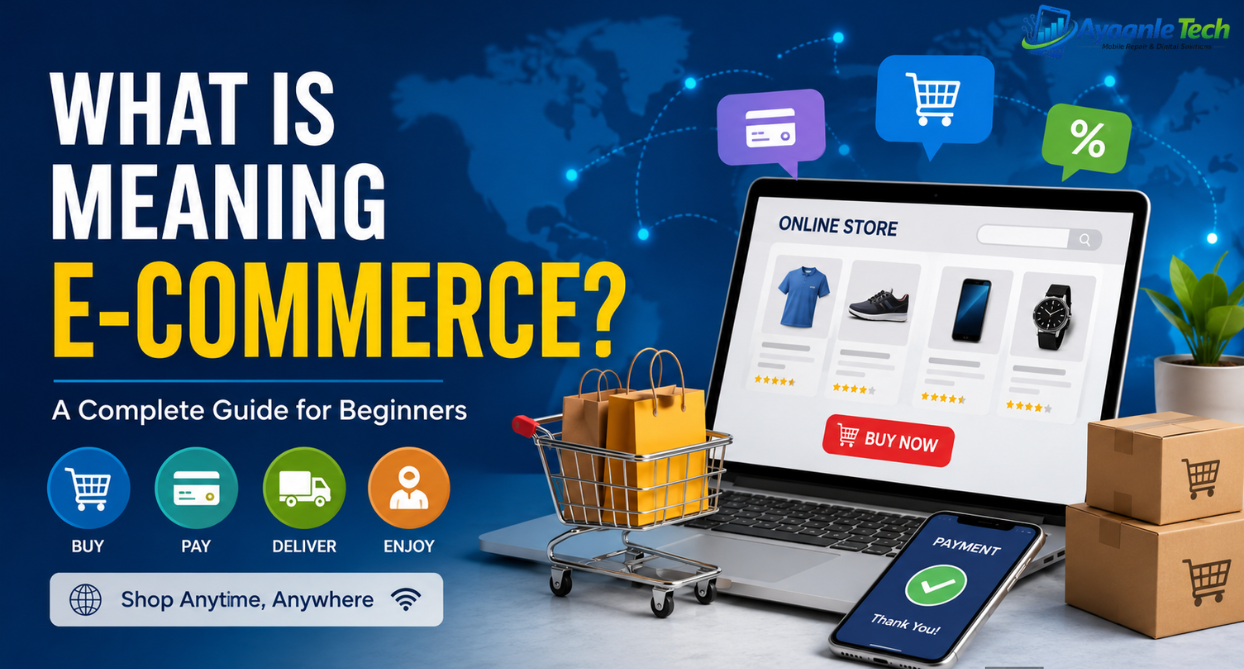
The digital world has transformed how people buy and sell products. Today, businesses can reach customers across cities, countries, and continents without opening a physical store. This modern way of conducting business is known as E-commerce.
If you have ever purchased a product from an online store, booked a hotel online, ordered food through an app, or subscribed to a digital service, you have already used ecommerce.
In this comprehensive guide, we will explain what ecommerce is, how it works, its types, benefits, challenges, examples, and why it has become one of the most important industries in the modern economy.
What Is the Meaning of E-commerce?
E-commerce (Electronic Commerce) refers to the buying and selling of goods and services over the internet.
In simple terms, ecommerce allows businesses and consumers to conduct transactions online without meeting in person.
The term includes:
- Online shopping
- Digital payments
- Internet banking
- Online marketplaces
- Subscription services
- Digital product sales
- Online ticket booking
Whenever a customer purchases a product through a website or mobile application, an ecommerce transaction takes place.
Quick Definition
E-commerce is the process of conducting commercial transactions electronically through the internet.
How Does E-commerce Work?
E-commerce involves several steps that work together to complete a transaction.
Step 1: Customer Visits an Online Store
A user visits an ecommerce website or mobile app and browses products or services.
Step 2: Product Selection
The customer selects desired items and adds them to a shopping cart.
Step 3: Checkout Process
The customer enters shipping information and chooses a payment method.
Step 4: Online Payment
Payment is processed through:
- Credit cards
- Debit cards
- Mobile wallets
- Bank transfers
- Digital payment gateways
Step 5: Order Confirmation
The business receives the order and prepares it for delivery.
Step 6: Product Delivery
The item is shipped to the customer’s address or delivered digitally if it is a digital product.
History of E-commerce
E-commerce began long before modern online shopping websites.
1960s
Businesses used Electronic Data Interchange (EDI) systems to exchange business documents electronically.
1979
Michael Aldrich introduced online shopping concepts using connected television systems.
1990s
The growth of the internet led to the launch of major ecommerce websites.
1994
The first secure online transaction was completed.
1995
Major online retailers emerged and changed global shopping habits.
2000s to Present
Smartphones, mobile apps, cloud computing, and digital payment systems accelerated ecommerce growth worldwide.
Today, billions of online purchases occur every year.
Types of E-commerce
1. Business-to-Consumer (B2C)
Businesses sell directly to customers.
Examples:
- Clothing stores
- Electronics stores
- Online pharmacies
- Grocery delivery platforms
This is the most common form of ecommerce.
2. Business-to-Business (B2B)
One business sells products or services to another business.
Examples:
- Wholesale suppliers
- Manufacturing equipment providers
- Software service providers
3. Consumer-to-Consumer (C2C)
Consumers sell products directly to other consumers.
Examples:
- Online marketplaces
- Classified websites
- Auction platforms
4. Consumer-to-Business (C2B)
Individuals offer products or services to businesses.
Examples:
- Freelancers
- Influencers
- Content creators
- Consultants
5. Business-to-Government (B2G)
Businesses provide services or products to government agencies through digital platforms.
Examples of E-commerce
E-commerce exists in many forms across different industries.
Retail Shopping
Customers purchase:
- Clothing
- Electronics
- Home appliances
- Furniture
- Beauty products
Digital Products
Businesses sell:
- Software
- E-books
- Online courses
- Digital subscriptions
Service-Based E-commerce
Examples include:
- Hotel reservations
- Flight bookings
- Online consultations
- Streaming services
Food Delivery
Customers order meals online and receive home delivery.
Key Components of an E-commerce Business
Product Catalog
Displays products with:
- Images
- Descriptions
- Prices
- Specifications
Shopping Cart
Allows customers to collect products before checkout.
Payment Gateway
Processes online payments securely.
Inventory Management
Tracks stock levels and product availability.
Order Management
Handles order processing and shipping.
Customer Support
Assists before and after purchases.
Benefits of E-commerce
1. Global Reach
Businesses can sell products worldwide.
2. Lower Operating Costs
Online stores often cost less than physical stores.
3. 24/7 Availability
Customers can shop anytime.
4. Convenience
People can shop from home using smartphones or computers.
5. Better Customer Data
Businesses can analyze customer behavior and improve marketing strategies.
6. Scalability
Online businesses can grow quickly without opening multiple physical locations.
7. Faster Transactions
Digital payment systems make purchases efficient.
Advantages for Customers
Customers enjoy many benefits from e-commerce.
Time Saving
No need to visit physical stores.
More Choices
Access to products from around the world.
Easy Price Comparison
Customers can compare prices instantly.
Reviews and Ratings
Buyers can make informed decisions.
Home Delivery
Products arrive at the customer’s doorstep.
Challenges of E-commerce
Despite its advantages, ecommerce also faces challenges.
Security Risks
Cyberattacks and data breaches can affect businesses and customers.
Intense Competition
Thousands of businesses compete online.
Shipping Issues
Delays and logistics problems can impact customer satisfaction.
Product Returns
Managing returns can be costly.
Technical Problems
Website downtime can result in lost sales.
Importance of Mobile Commerce
Mobile commerce, or m-commerce, refers to ecommerce conducted through mobile devices.
Today, many online purchases happen through:
- Smartphones
- Tablets
- Mobile applications
Businesses must optimize websites for mobile users to remain competitive.
E-commerce and Digital Marketing
Digital marketing plays a crucial role in ecommerce success.
Popular marketing channels include:
Social Media Marketing
Builds brand awareness and customer engagement.
Email Marketing
Promotes products and nurtures customer relationships.
Pay-Per-Click Advertising (PPC)
Generates targeted traffic quickly.
Future of E-commerce
The future of ecommerce looks promising.
Emerging technologies include:
Artificial Intelligence (AI)
AI improves:
- Product recommendations
- Customer support
- Personalization
Voice Commerce
Customers can shop using voice assistants.
Augmented Reality (AR)
Allows customers to visualize products before purchasing.
Automation
Reduces operational costs and improves efficiency.
Blockchain Technology
Enhances security and transparency.
Why E-commerce Is Growing Rapidly
Several factors contribute to ecommerce growth:
- Increased internet access
- Smartphone adoption
- Digital payment systems
- Improved logistics networks
- Consumer preference for convenience
Businesses that embrace e-commerce gain significant competitive advantages.
See Also:
FAQs
What is the simple meaning of ecommerce?
E-commerce is the buying and selling of products or services over the internet.
Why is e-commerce important?
E-commerce allows businesses to reach global customers while providing convenient shopping experiences.
What are examples of e-commerce?
Examples include online stores, food delivery apps, digital subscriptions, and online marketplaces.
Is e-commerce only for products?
No. E-commerce includes both physical products and digital services.
What is the difference between e-commerce and traditional commerce?
Traditional commerce occurs in physical locations, while ecommerce takes place online through websites and apps.
Can small businesses use ecommerce?
Yes. Small businesses can start online stores and sell products locally or globally.
Conclusion
The meaning of ecommerce is simple: conducting business electronically through the internet. However, its impact on the global economy is enormous. E-commerce has transformed how consumers shop, how businesses operate, and how products and services are delivered worldwide.
From small startups to multinational corporations, there are opportunities for growth, efficiency, and global reach. As technology continues to evolve, ecommerce will remain a key driver of digital transformation and economic development.
